fiilo, a CRM for tailor shops
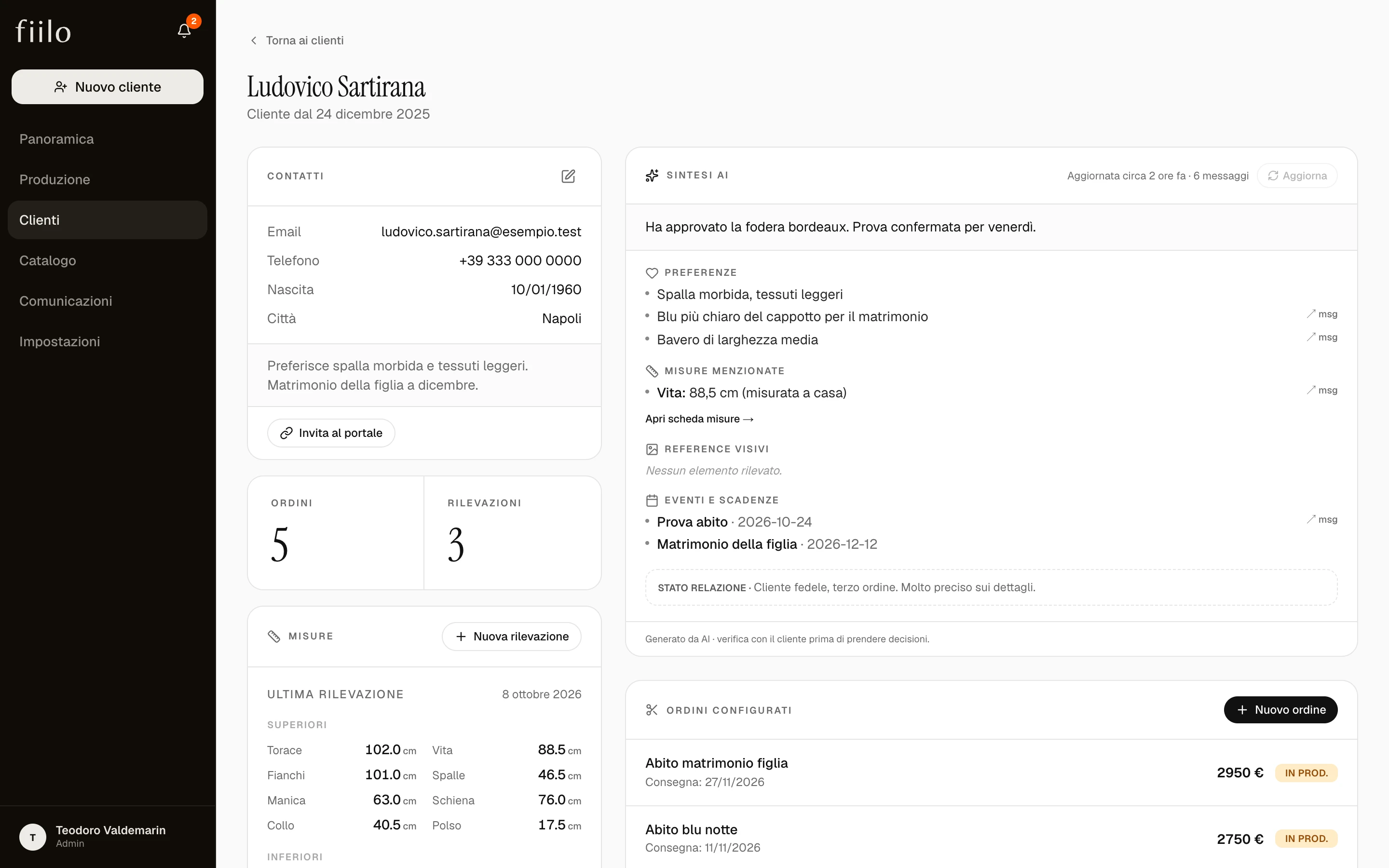
A CRM built for made to measure tailors. Every client card fills itself from several sources at once, so the tailor sees measurements, orders, choices and conversations in one place.
- Role
- Founder, designer and builder
- Period
- 2026
- Stack
- Next.js 16React 19Tailwind 4SupabaseWhatsApp Business APIClaude Haiku 4.5Resend
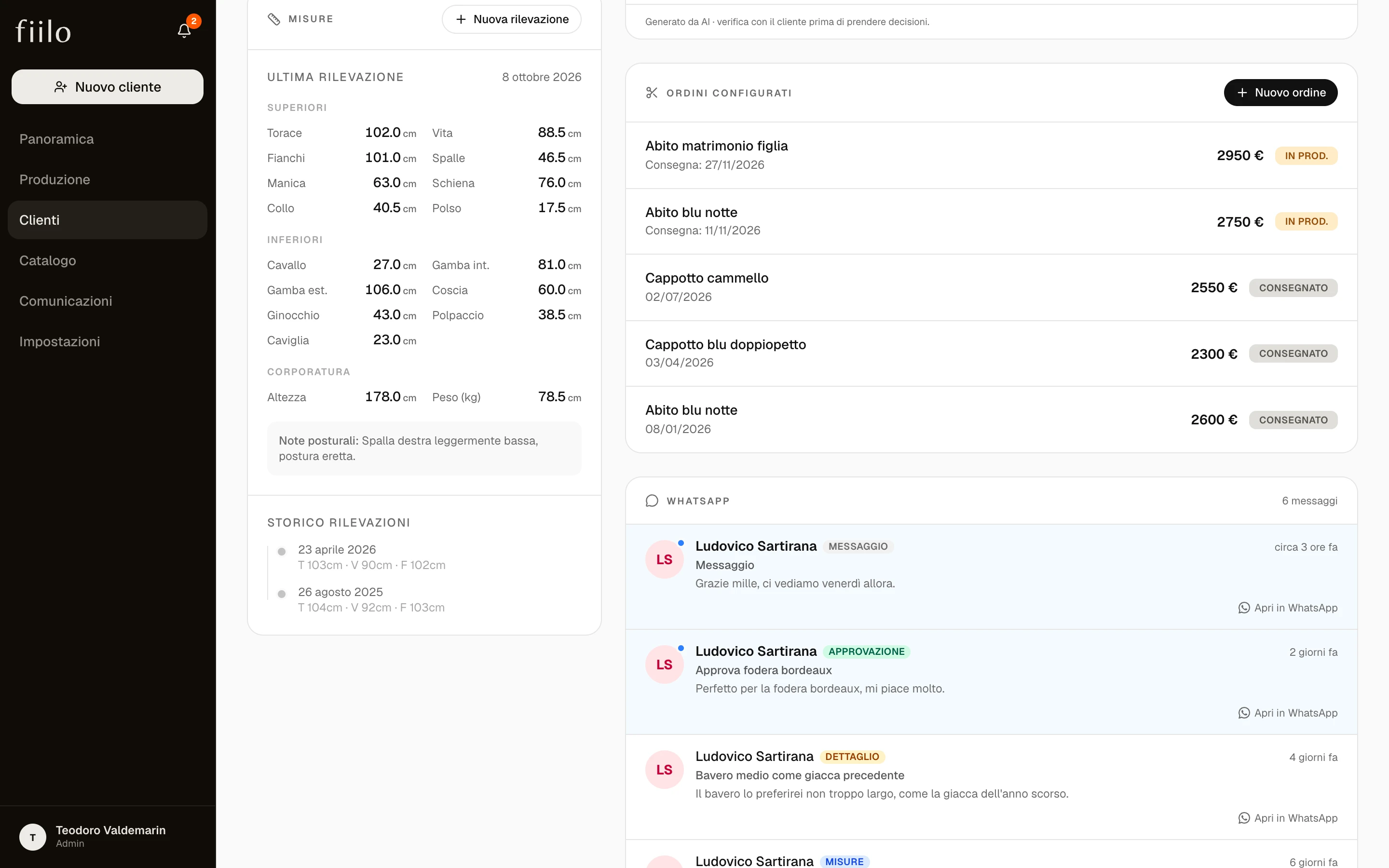
I designed and built fiilo, a CRM dedicated to made to measure tailors. Every client has one card, and it fills itself from several sources at once: the measurement history, the garments configured and in production, the quotes, the fabrics they chose, and the conversations. No more measures on paper, no more orders that live only in the tailor's head.
The context
Buying a car went digital in fifteen years. Tailoring has the same structure, one craftsman, a loyal client, repeat orders over decades, and it stayed on paper. The online players went the other way: they started on the web and had to open physical ateliers, because measuring yourself is too hard.
fiilo starts from the physical tailor. The first fitting cannot be digitised. Everything after it can. So every feature has to pass one test: does it preserve the relationship between the tailor and the client, or does it get in the way? fiilo is never a shop that replaces the tailor. It is an extension of their atelier.
The problem
I started from one real tailor's shop. What the tailor knew about a client was spread across a paper measure book, the order list, quotes, fabric samples and the messages on their phone. None of it was connected. Finding a measure or what a client liked meant digging through all of them, and they never matched.
How I approached it
I built what that one shop needed, in the order they needed it, and shipped to production at every step. The domain went live on 11 May 2026.
The rule for every feature was the same: the tailor should never type the same thing twice. Data comes in from where it already is, and the client card puts it together on its own.
Let's see the result
- A client card that enriches itself. Measurements, configured garments, production status, quotes and chosen fabrics all land on the same card as they happen. Nothing is copied by hand.
- Conversations as one more source. Messages from the tailor's WhatsApp Business number arrive in the right client's card, tagged by a rule based classifier (measurement, photo, reference, question). Each tailor connects their own number in a few clicks.
- An AI summary of every client. Claude reads what the client said and writes what they like, what they ordered and what they asked last, with a citation on every claim so the tailor can jump to the source. Capped at twenty summaries a day per shop.
- Search that forgives word order. "mario del prete" finds "Del Prete Mario". It works across clients, production, the new garment form and the platform admin.
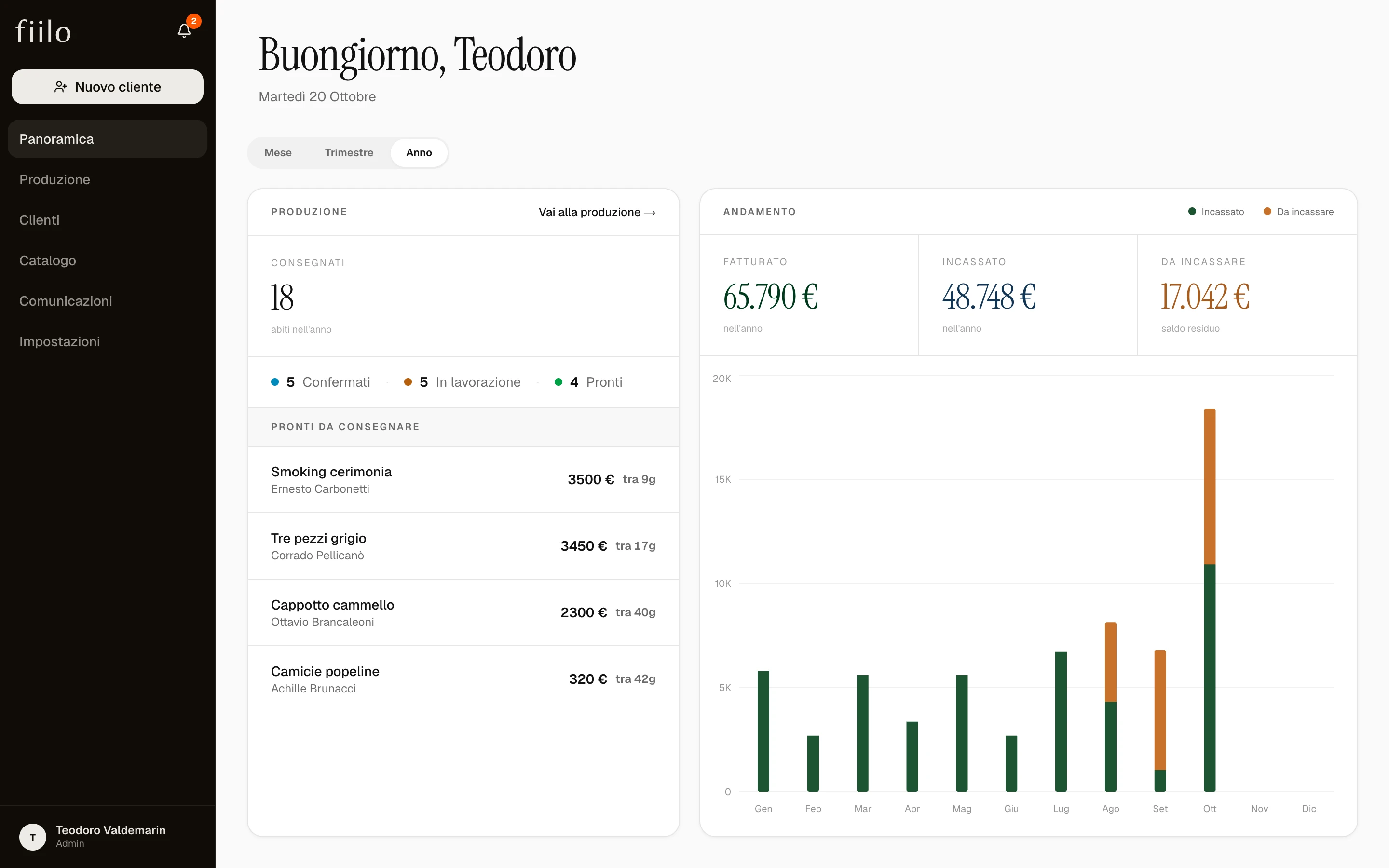
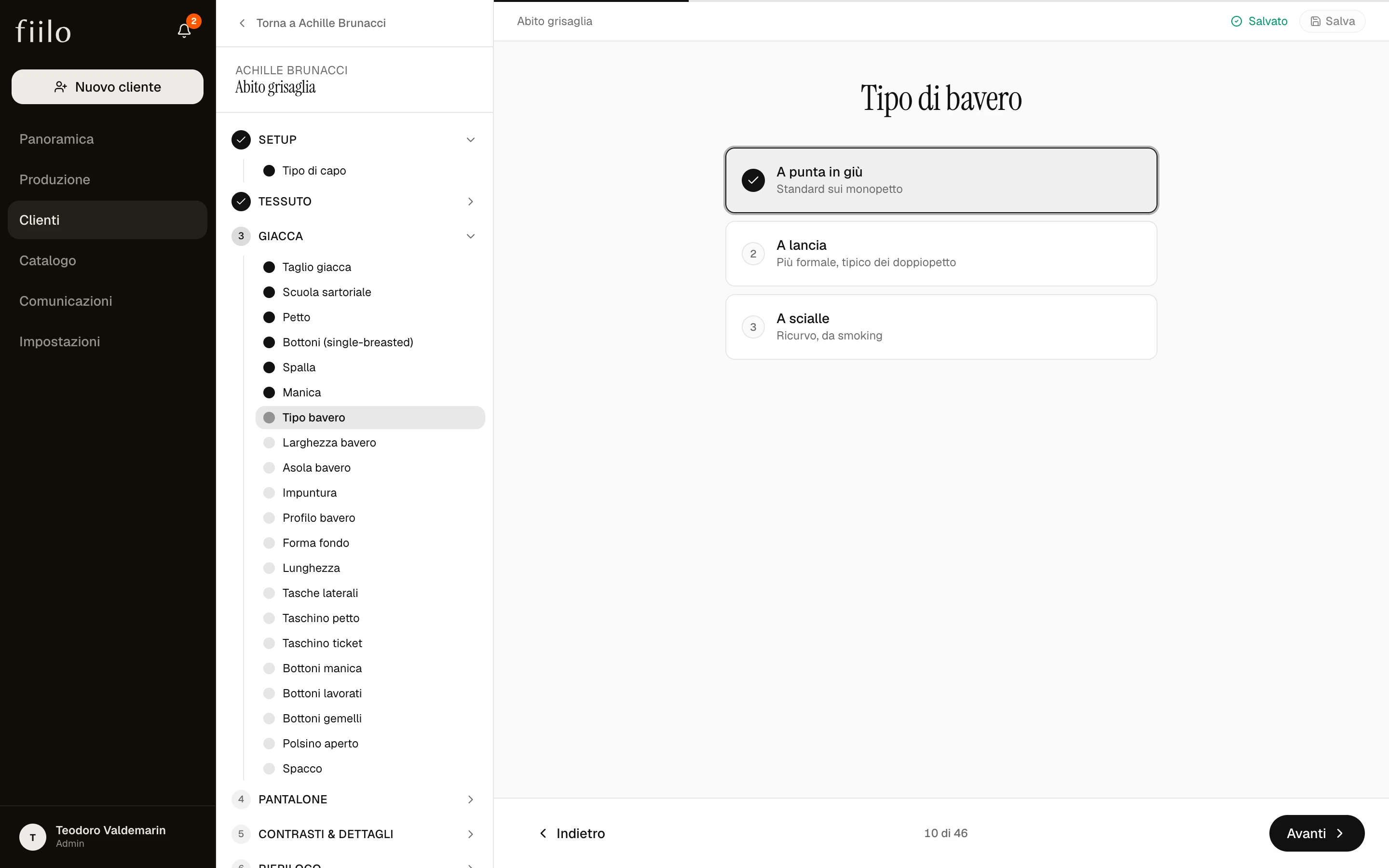
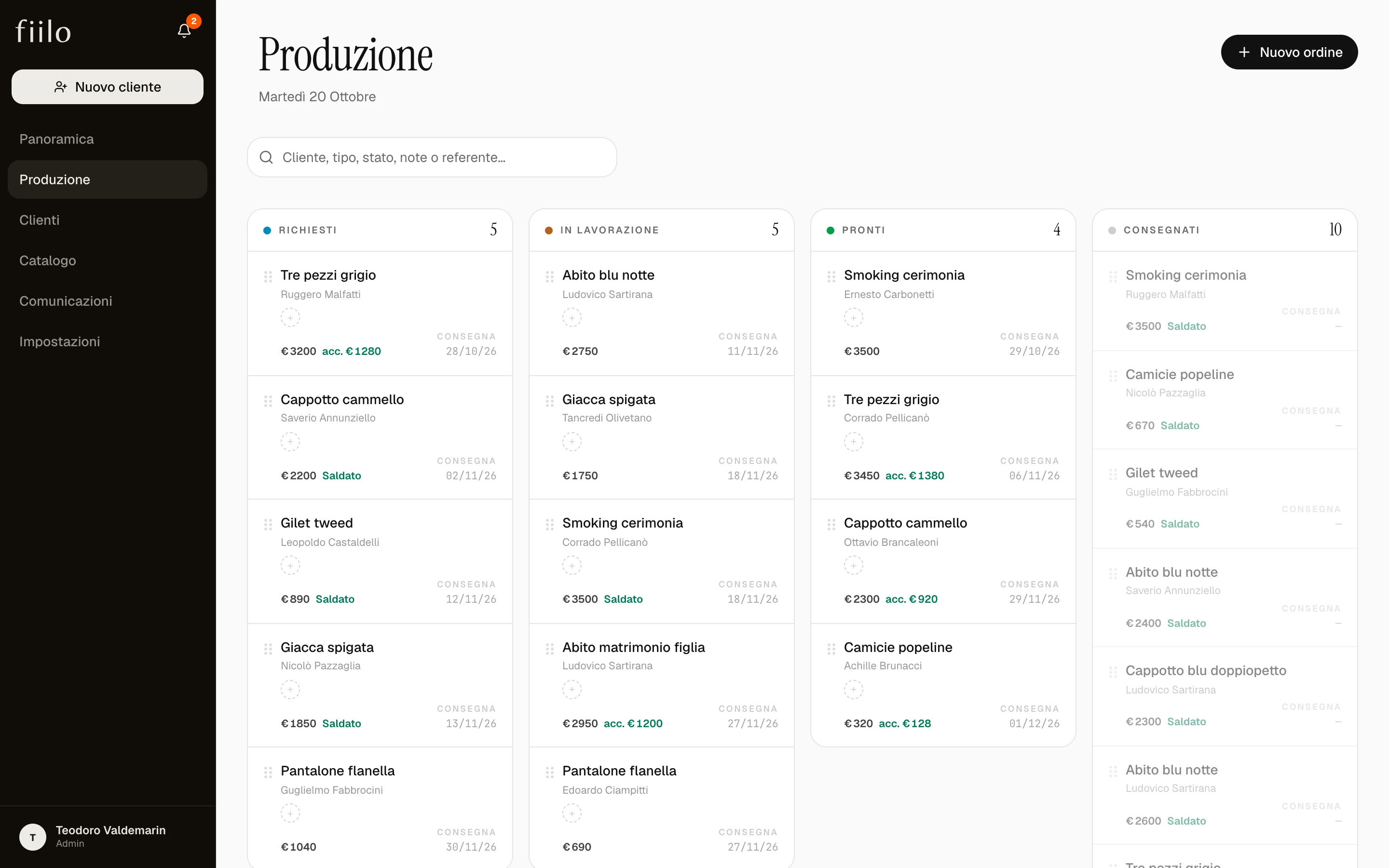
- Production, catalog and quotes. A board for garments in progress, a fabric catalog, and PDF quotes generated from the order.
What comes next
The remote relationship. A customer portal where a client who has been measured once can reorder from home. A WhatsApp push when a fabric arrives that matches what a client likes. Newsletters written from what the tailor already knows about each person. The first versions exist in the codebase, and they wait until a few real shops have validated the base.
Impact
More screens